Ellen Dorsey on Fossil Fuel Divestment, Greenwashing and Why We All Have to Be Climate Activists
By Lexy Silverstein
How TIME100 Climate leader Ellen Dorsey moved her foundation’s money out of fossil fuels, and why she says we all have to be climate activists now
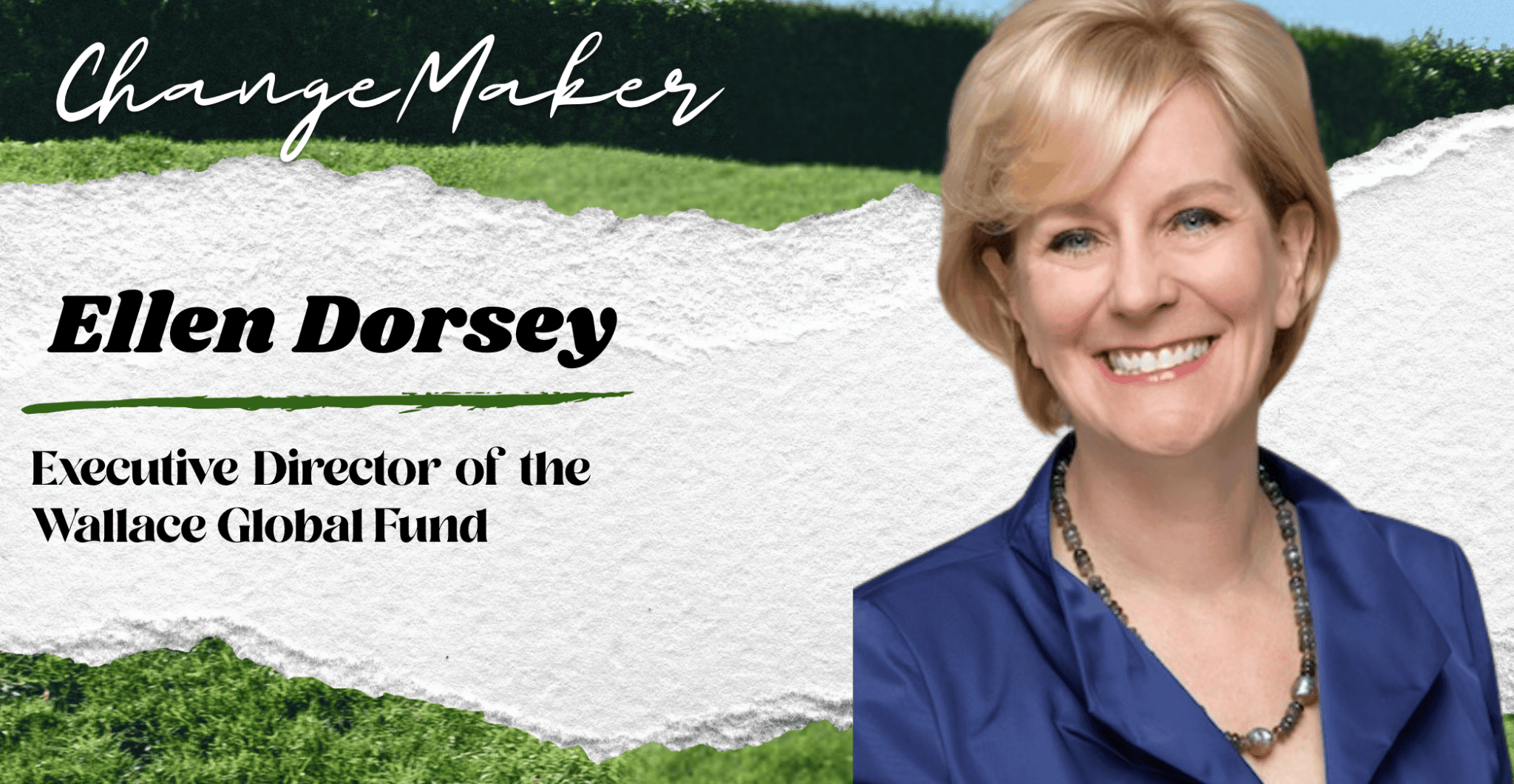
TIME just named Dr. Ellen Dorsey to its 2026 TIME100 Climate list, and her foundation is giving away every dollar it has.
We’re constantly told to recycle more, shop sustainably, use less plastic, and reduce our carbon footprints. All those things do matter. But sometimes I feel like we’re being asked to save the planet one reusable water bottle at a time while the world’s biggest corporations continue business as usual.
So, who’s actually responsible for fixing the climate crisis?
“A problem of this magnitude of climate change and the power of the fossil fuel industry and of petrostates around the world requires system change.”
That’s what I wanted to explore when I sat down with Dr. Ellen Dorsey, Executive Director of the Wallace Global Fund, for a recent episode of The Lexy Show.
Ellen has spent decades fighting for climate justice and human rights. She also helped build a global movement encouraging institutions to stop investing in fossil fuels, a movement that now covers about $40 trillion in assets.
But what I found most interesting about our conversation wasn’t just what Ellen has accomplished. It was how she thinks about change.
Because according to Ellen, the climate crisis isn’t only about the environment. It’s also about money, power, and the systems we’ve allowed to operate without enough accountability.
Your Investments Say More Than You Think
Here’s something I hadn’t really considered before: Institutions that claim to care about the planet can still be investing huge amounts of money in the industries contributing to climate change.
Think about universities, foundations, pension funds, and other organizations with massive investment portfolios.
Ellen explains that when she became Executive Director of the Wallace Global Fund, she wanted to look at whether the foundation’s investments actually aligned with its mission.
“It was important that we took a look at our own investments and said, ‘Are we driving the problem that we’re at with the lion’s share of the money … that we’re then giving money to our grantees to clean up the impact of?’”
If you’re funding organizations trying to protect the environment, why would you also invest in companies contributing to its destruction?
Ellen puts it bluntly: “If you’re holding oil stock, you own climate change.”
So the Wallace Global Fund began moving its investments away from fossil fuels and toward solutions.
And it worked financially, too.
According to Ellen, the foundation’s investment portfolio achieved top-decile returns over its last full decade before beginning its final spend-out. Ellen says 26% of the portfolio was invested in climate solutions, and that helped drive the outperformance.
That challenges the argument that doing what’s right for the planet automatically means sacrificing financial performance.
It also made me think about the fashion industry. We constantly hear brands talk about sustainability, but how much do we really know about where their money goes?
Greenwashing Isn’t Just a Fashion Problem
If you’ve followed me for a while, you know I have a lot to say about greenwashing.
A fashion brand launches a small sustainable collection, makes a huge marketing campaign about it, and then continues producing enormous amounts of clothing.
Suddenly we’re supposed to believe the company is environmentally responsible.
But greenwashing goes way beyond fashion. Banks, investors, energy companies, and other corporations also use sustainability messaging to improve their reputations.
Ellen makes a point: We have more tools than ever to investigate what companies are actually doing.
“You can map this stuff so fast. It’s just about putting the tools together that allows somebody to go into a store or to look online and really have a go-to place that says, ‘Here’s this company’s real record.’”
We can research their investments, supply chains, political connections, and environmental records.
But we also need to change how much we consume.
Ellen encourages people to share, swap, reuse, and shop vintage rather than constantly buying something new.
I’m a huge believer in secondhand shopping, and most of my own closet is resale. [CONFIRM WITH LEXY] But this conversation reminded me that buying secondhand isn’t just about finding a cool vintage piece. It’s also about challenging a system that depends on endless consumption.
And when enough people change their habits, companies have a reason to change theirs.
Sustainability Has to Include Human Rights
One of my biggest frustrations with the fashion industry is how often environmental sustainability and ethical labor practices are treated as separate conversations.
A company can reduce its emissions and still exploit the workers making its products.
That’s not my definition of sustainable.
Ellen’s work has always tied environmental protection to human rights, and she says the two can’t be separated.
“Keeping the ethical married to the sustainable is crucial, because we have to do both, ’cause they’re intertwined.”
Climate change affects access to food, water, housing, and other basic rights. And the people fighting pollution or environmentally harmful projects in their communities can face threats, harassment, and retaliation.
The same principle applies to fashion.
It’s not enough to ask whether a garment was made with a lower-impact material. We also need to ask who made it, how they were treated, and what happened throughout the supply chain.
A truly sustainable industry has to protect both the planet and the people living on it.
We Need More Than Better Shopping Habits
Ellen’s point: Individual choices matter, but a problem as big as climate change requires systemic change.
I think about this constantly when it comes to fashion.
In my ideal world, every fashion company would be required to operate ethically and sustainably. We wouldn’t have to spend hours researching whether a brand was greenwashing us because responsible production would be the standard.
And that doesn’t happen just because consumers buy the right things.
It happens through organizing, legislation, accountability, and people demanding better.
When I was in college, my school partnered with SHEIN. I was furious. So I spoke up, and I discovered that other students felt the same way. [CONFIRM WITH LEXY: school name and details]
That experience reminded me that you don’t have to be a politician, CEO, or millionaire to make your voice heard.
Ellen takes that idea further.
She points out that while most people don’t have millions of dollars themselves, many of us are connected to institutions that do.
Our universities, workplaces, retirement funds, and communities all have financial influence.
We can ask where that money is invested and demand accountability.
That’s a form of activism, too.
Why Ellen’s Foundation Is Giving Away All Its Money
One of the most surprising parts of our conversation was learning why the Wallace Global Fund decided to spend down its entire endowment rather than exist forever.
Ellen’s explanation is simple: If the world is facing urgent crises, why save resources for a distant future when they could put them to work right now?
“You can’t sit on bags of gold when there are movements and organizers that are starved for resources.
The foundation has directed its resources toward climate action, grassroots organizing, human rights, and defending democracy.
Ellen also challenges other foundations to think seriously about how much they’re giving away.
Not every foundation needs to close its doors, but she argues that institutions should question whether maintaining their wealth is more important than using it to confront urgent problems.
Because what is the point of having resources to change the world if you’re unwilling to use them?
So, What Can We Actually Do?
I know conversations about climate change can feel overwhelming.
Sometimes I think about how much time we’ve lost and how much work we still have ahead of us, and I get bummed.
But Ellen’s perspective gave me hope.
She has seen communities challenge pipelines, shut down polluting facilities, and organize for alternatives that benefit their communities.
And she believes collective action is how we continue making progress.
So here’s what I’m taking away from our conversation:
- Keep shopping secondhand, swapping, sharing, and rewearing what you already own, especially this Black Friday.
- Research companies beyond their sustainability marketing.
- Ask questions about where your school, workplace, or other institutions invest their money.
- Support organizations and community groups doing environmental and human rights work.
- Speak up, get involved, and find people who care about the same issues you do.
You don’t have to do everything. And you definitely don’t have to do it alone.
Ellen said something toward the end of our conversation that perfectly sums it up:
“You might have millions of dollars and don’t know it, because you have access to institutions that have millions of dollars.”
That doesn’t mean everyone has to protest or become a full-time environmental advocate.
It means finding a way to use whatever influence, skills, time, or resources you have to help create change.
For me, a lot of that starts with fashion. It’s the industry I love, the industry I studied, and the industry I want to help make better. But it doesn’t end there. I buy reusable towels in place of paper towels, I buy shampoo and conditioner bars, and invest in clean beauty and home supplies. I also furnished my entire apartment with secondhand furniture and decor.
The bigger lesson from Ellen is that changing an industry means looking beyond what we buy and asking who has the power to change how things work.
And then figuring out how to use our collective power to make that happen.
Changemaker Takeaway: Follow the money. Your school, your job and your retirement fund all invest somewhere, and you have the right to ask where.
You can learn more about Ellen’s work and the Wallace Global Fund at wgf.org.
Listen to the full conversation with Dr. Ellen Dorsey on The Lexy Show. https://youtu.be/MZ5rvN3xHts

Lexy Silverstein,