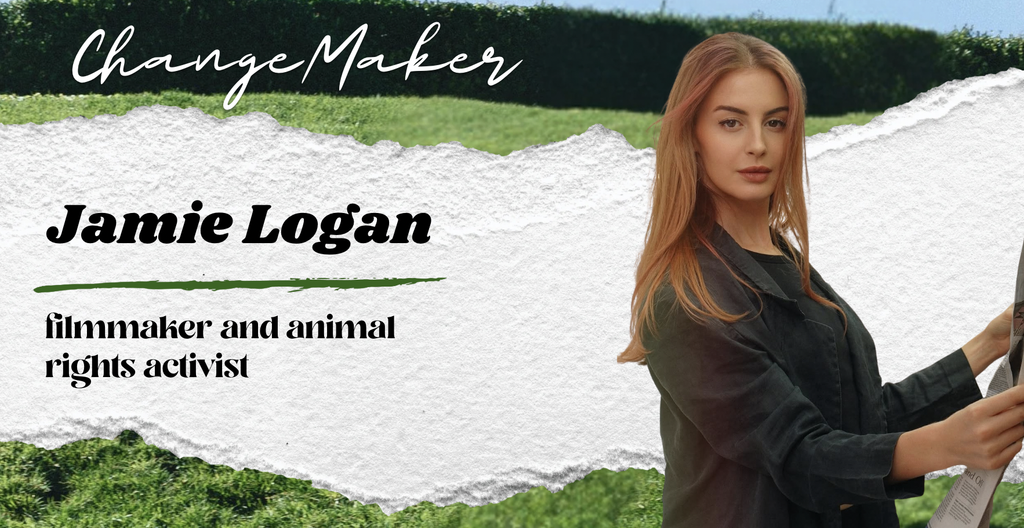
How filmmaker and animal rights activist Jamie Logan is challenging the way we think about fashion, sustainability and the impact behind our everyday choices
When we talk about sustainable fashion, the conversation often starts with what we buy: shopping secondhand, investing in quality pieces, avoiding fast fashion and choosing more responsible materials. But for animal rights activist, filmmaker and content creator Jamie Logan, sustainability begins with a deeper question:
How do our everyday choices impact the world around us?
Through her platform Jamie’s Corner, Jamie uses street conversations, interviews, humor and education to challenge the way people think about animals, fashion, food and consumption. Her work encourages people to look beyond what is marketed as normal and consider the stories, systems and lives behind the products they use every day.
For Jamie, sustainability is not just about making better purchases. It is about developing greater awareness, compassion and responsibility.
“Let’s make compassion trendy and cool.”
How Did Jamie Logan Become an Animal Rights Activist?
Jamie never imagined herself becoming an activist.
Growing up, she describes herself as someone who avoided conflict and often tried to bring people together rather than challenge them. She was not someone who wanted to make people uncomfortable or create controversy.
But after learning more about the food system and seeing footage from slaughterhouses, Jamie found herself unable to ignore what she had discovered.
“I thought that by showing people, ‘Hey, this is what has to happen to animals for them to get to your plate,’ that they would just be like, ‘Oh my gosh, I’m not going to eat them anymore,’” Jamie explained.
Instead, she discovered that many people reacted defensively.
That experience taught her something important about activism: information alone does not always create change. People often need to feel connected to an issue before they are willing to rethink their choices.
Today, Jamie focuses on creating conversations rather than simply delivering messages. She asks questions, listens to people’s perspectives and tries to meet them where they are.
“People come from all different backgrounds and experiences,” she said. “It’s important to ask questions and kind of gauge where they’re at.”
Why Should We Question Leather, Wool and Fur?
For Jamie, sustainability extends far beyond what we eat. It also includes what we wear.
Jamie believes we should take a closer look at the origins of those materials and the impact behind them.
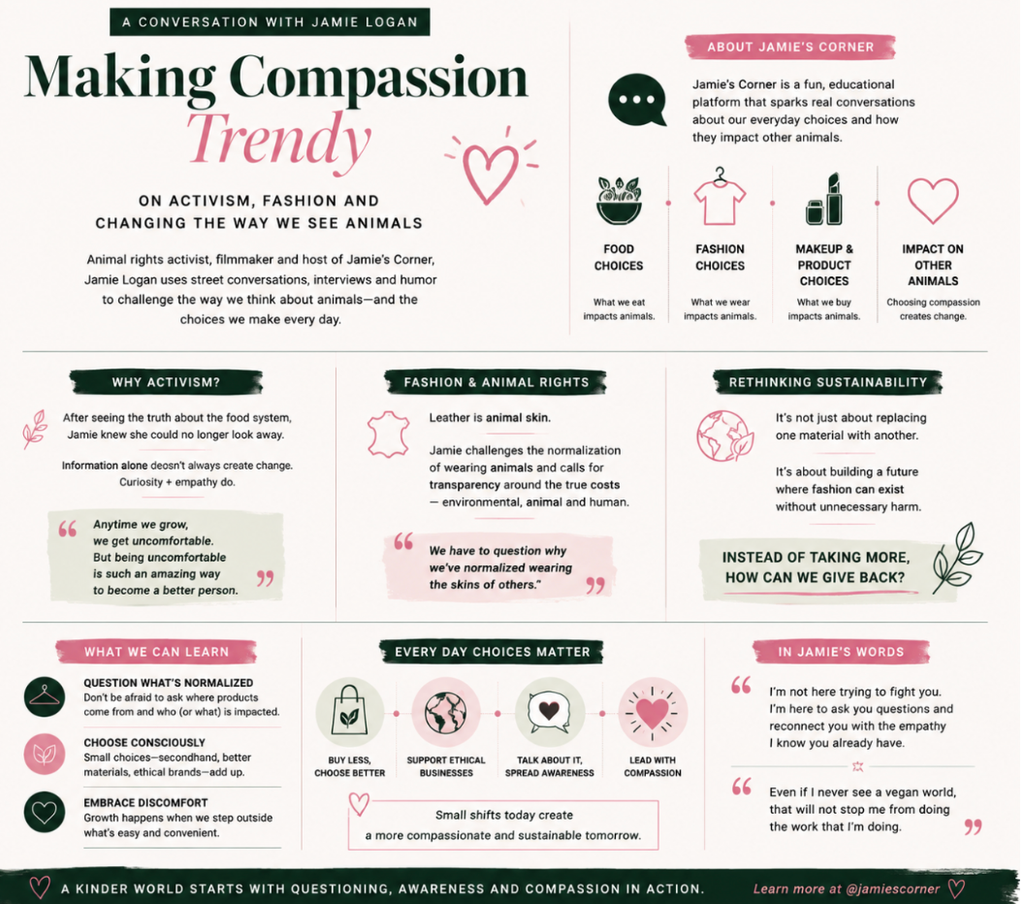
“Leather is animal skin,” Jamie said. “We have to question why we’ve normalized wearing the skins of others.”
Her perspective challenges a common assumption in fashion: that certain traditional materials are automatically more sustainable simply because they have been used for generations.
Jamie believes that consumers need more transparency around how materials are produced, considering not only environmental impacts, but also animal welfare and human rights.
She points to leather production as an example of an industry where environmental concerns, chemical use, and worker conditions intersect. To keep animal skin from rotting, it is heavily treated with chemicals and often coated in plastic, ensuring it never truly breaks down. This process creates severe environmental hazards, particularly in tannery regions like certain villages in India that have become known as “cancer villages” due to the high rates of illness among workers and residents. For Jamie, this makes leather a human rights and environmental issue just as much as an animal rights one.
For Jamie, the conversation is not just about replacing one material with another. It is about questioning the systems behind the things we consume.
The Fur vs. Leather Double Standard
One of the most interesting parts of Jamie’s activism is her look at why society treats fur and leather so differently. While fur has been largely villainized—often associated with a “Cruella de Vil” vibe thanks to decades of targeted activism—leather is still celebrated. It’s marketed as a “cool,” timeless, and sophisticated staple, often escaping the same moral scrutiny.
Jamie encourages those who still own fur to move away from wearing it and instead “donate it back to the animals”. Actionable programs like “Coats for Cubs” or donations to wildlife sanctuaries allow old furs to be used in the rehabilitation of orphaned, sick, or dying animals, providing them with comfort and warmth.
What’s Next for Sustainable Fashion Materials?
As fashion continues exploring alternatives to traditional materials, Jamie believes there is an opportunity to rethink what we consider valuable.
Today, designers and innovators are creating new materials made from plant-based sources and developing new technologies that challenge the idea that animal-derived materials are necessary for fashion.
Jamie believes part of the challenge is changing the way people think about these alternatives.
Often, sustainable materials are compared directly against traditional ones rather than being appreciated for what they offer on their own.
The bigger question, she believes, is not simply whether a material looks exactly like something from the past — but whether we are willing to build a future where fashion can exist without unnecessary harm.
Instead of constantly asking what more we can take from the planet, Jamie encourages people to ask:
How can we give back?
How Does Jamie Logan Talk to People About Animal Rights?
Jamie’s social media presence is known for asking people challenging questions, sometimes earning her the joking description that she “ruins people’s day.”
But that is not her goal.
Her goal is to create moments where people pause, reflect and reconsider something they may have never questioned before.
“I’m not here trying to fight you,” she said. “I’m here to ask you questions and reconnect you with the empathy I know you already have.”
Jamie uses humor because she believes people are more open to conversations when they feel engaged rather than attacked.
At the same time, she recognizes that meaningful change often requires discomfort.
“Anytime we grow, we get uncomfortable,” she said. “But being uncomfortable is such an amazing way to become a better person.”
The “Processed” Myth
Jamie also works to demystify buzzwords like “processed,” which is often used to discourage people from trying plant-based alternatives. She points out that “processed” simply means taking one form of something and changing it into another—like blending fruit and oat milk into a smoothie. She contrasts this with the reality of animal products, noting that consumers are often comfortable with the extreme processing of meat but wary of a “processed” cashew cheese.
That idea applies to sustainability as a whole. Changing habits is rarely easy, whether that means buying less, shopping differently or learning about the hidden impacts of products we once took for granted.
What Can the Fashion Industry Learn From Animal Rights Activism?
While Jamie’s work focuses heavily on animal rights, her message connects to a larger sustainability movement: awareness is the first step toward change.
Many of the biggest environmental challenges we face are connected to systems that have become normalized. Fast fashion, overconsumption and waste continue because they are convenient, familiar and heavily marketed.
Jamie believes we have the power to question those systems and create new definitions of what is desirable.
The fashion industry has always been about storytelling. Clothing communicates identity, values and creativity.
Jamie believes the next evolution of fashion should include compassion as part of that story.
“Let’s make compassion trendy and cool,” she said.
How Can You Choose Sustainability Over Convenience?
For Jamie, veganism is not just a diet—it is an ethical stance against the exploitation of animals in all forms, including testing, entertainment, and riding. It is about intention rather than perfection.
She acknowledges that we live in a world where avoiding every harmful product or material is not always possible. Instead, she encourages people to do what they can, continue learning and make choices that align with their values whenever possible.
Small decisions can become part of a larger cultural shift.
Choosing secondhand clothing. Researching materials. Supporting ethical brands. Asking questions before buying something new.
Every choice sends a message about the kind of world we want to create.
“Even if I never see a vegan world, that will not stop me from doing the work that I’m doing,” Jamie shared.
That mindset extends beyond activism. It is a reminder that meaningful change often comes from people who continue showing up, even when progress feels slow.
Learn More From Jamie Logan
To learn more about Jamie’s work, visit Jamie’s Corner and follow her conversations about animals, sustainability and conscious living.
Jamie’s message is ultimately about connection: connecting our choices to their consequences and recognizing that the products we consume are part of a much larger story.
Recommended Watching
- Game Changers: Excellent for those concerned about athletic performance and protein.
- The Smell of Money: Focuses on the intersection of factory farming, pollution, and human rights.
- Cowspiracy: A deep dive into the environmental impact of animal agriculture.
- Let Them Be Naked: Explores the chemical side of the fashion industry and its impact on health.
- Slay: An undercover investigation into the realities of the leather and fur industries.
Changemaker Takeaway:
Sustainability is not just about buying less. It is about understanding the impact behind what we consume, questioning what has been normalized and choosing compassion wherever we can.

Lexy Silverstein,