The Hidden Cost of Leather: What New Research Reveals About Fashion’s Favorite Material
When we think about the environmental impact of animal agriculture, most conversations focus on what’s on our plates. But what about what’s hanging in our closets?
Leather has long been marketed as a “natural,” durable, and even sustainable material. It is often described as a byproduct of the meat industry, something that would otherwise go to waste. But new research is challenging that assumption and revealing a more complicated story about one of fashion’s most iconic materials.
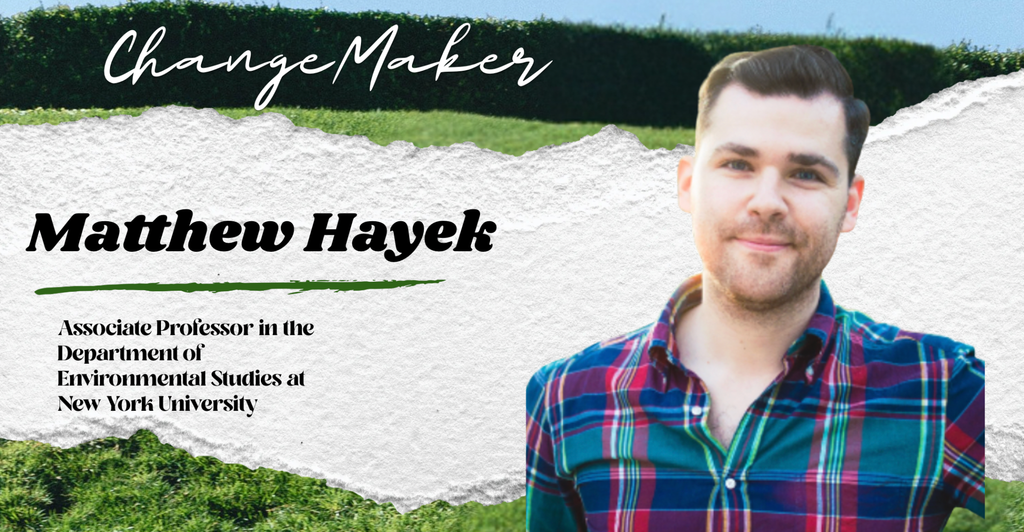
On this episode of The Lexy Show, I spoke with Matthew Hayek, Associate Professor in the Department of Environmental Studies at New York University, about his latest research exploring the true environmental footprint of bovine leather and what it means for the future of sustainable fashion.
Why Does Leather’s Environmental Impact Start Before It Reaches Your Closet?
Most people don’t think about the journey behind a leather handbag, jacket, or pair of shoes. But leather begins with cattle farming, meaning its environmental impact is tied to the entire lifecycle of raising animals.
Matthew explained that while much of the discussion around animal agriculture focuses on food production, cattle are also used for materials like leather, hides, wool, and other products. His research looks at how those materials factor into the overall emissions of animal agriculture.
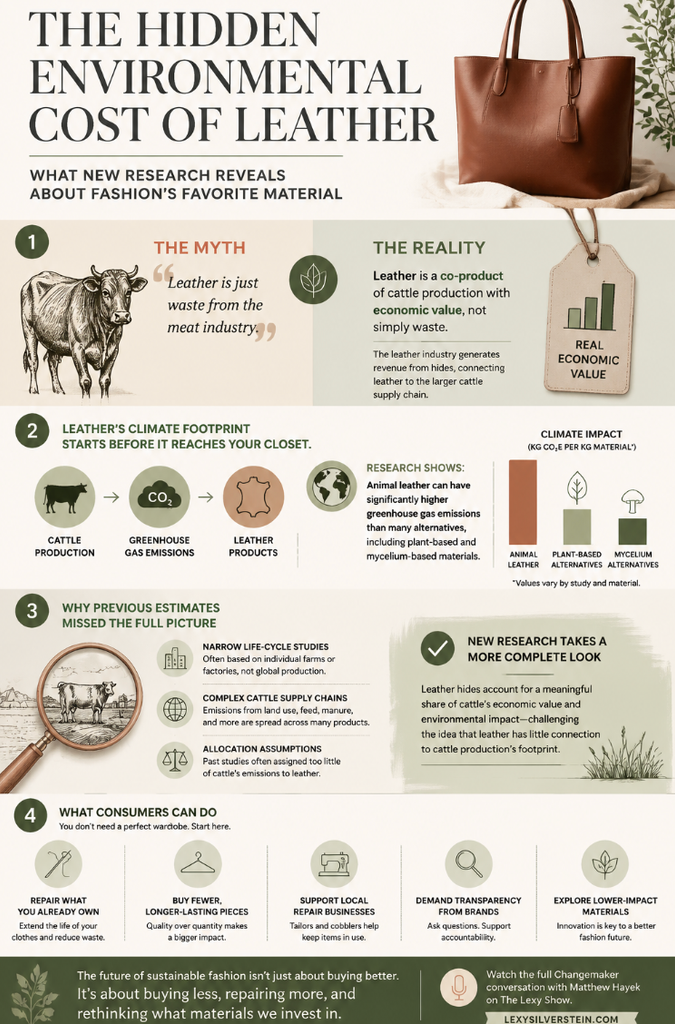
One of the biggest misconceptions about leather is that it is simply waste from the meat industry. According to Matthew, the reality is more complicated.
“It’s not a byproduct, it’s a co-product,” he explained, emphasizing that leather has economic value and contributes revenue to the industries producing it.
Because companies pay for leather hides, removing leather from the supply chain could affect the economics of slaughterhouses and the broader cattle industry.
Why Leather’s Carbon Footprint Has Been Underestimated
Matthew’s research found that previous estimates of leather’s environmental impact may have been too narrow.
Traditional life cycle analyses often look at specific farms or factories, but those examples may not represent global leather production.
Another challenge is how researchers divide emissions between different cattle products, including meat, dairy, and leather. Matthew explained that many previous calculations allocated too little of cattle’s emissions to leather because they relied on assumptions that heavily favored dairy production, even in regions where cattle are not raised for milk.
His research found that leather hides account for a meaningful share of cattle’s economic value and emissions, challenging the idea that leather has little connection to the environmental impact of cattle production.
Does Natural Always Mean Sustainable?
One of the biggest takeaways from our conversation was that “natural” does not automatically mean environmentally friendly.
Leather is often positioned as a better alternative because it is animal-based rather than fossil-fuel-based. But Matthew’s research found that animal leather can have significantly higher greenhouse gas emissions than many alternatives, including plant-based, mycelium-based, and synthetic leather alternatives.
That doesn’t mean every alternative is perfect. Some synthetic materials are low quality, rely on fossil fuels, and contribute to waste. The bigger question is: what materials are we investing in for the future?
Matthew argues that the fashion industry should look beyond simply replacing leather with another version of the same system and instead invest in lower-impact materials and new forms of material innovation.
So What Can You Do?
The sustainability conversation can often feel overwhelming. With complex supply chains, unclear labeling, and limited transparency, it can feel impossible to make the “perfect” choice.
But Matthew emphasized that you do not need to throw away everything they already own. One of the most impactful things we can do is extend the life of the clothing we already have.
His advice?
- Repair instead of replace.
- Support local tailors and repair shops.
- Buy fewer, higher-quality pieces.
- Choose materials thoughtfully when making new purchases.
- Demand greater transparency from brands.
Ultimately, sustainability is not just about choosing the “right” material. It is about questioning how much we consume, how long we use what we own, and what kind of fashion industry we want to build.
As Matthew put it, we should be asking a bigger question: Do we even need to buy this much stuff?
The future of fashion isn’t just about making better products. It’s about creating a culture where we value what we already have.
Does Natural Always Mean Sustainable?
One of the biggest takeaways from our conversation was that “natural” does not automatically mean environmentally friendly.
Leather is often positioned as a better alternative because it is animal-based rather than fossil-fuel-based. But Matthew’s research found that animal leather can have significantly higher greenhouse gas emissions than many alternatives, including plant-based, mycelium-based, and synthetic leather alternatives.
That doesn’t mean every alternative is perfect. Some synthetic materials are low quality, rely on fossil fuels, and contribute to waste. The bigger question is: what materials are we investing in for the future?
Matthew argues that the fashion industry should look beyond simply replacing leather with another version of the same system and instead invest in lower-impact materials and new forms of material innovation.
So What Can You Do?
The sustainability conversation can often feel overwhelming. With complex supply chains, unclear labeling, and limited transparency, it can feel impossible to make the “perfect” choice.
But Matthew emphasized that you do not need to throw away everything they already own. One of the most impactful things we can do is extend the life of the clothing we already have.
His advice?
- Repair instead of replace.
- Support local tailors and repair shops.
- Buy fewer, higher-quality pieces.
- Choose materials thoughtfully when making new purchases.
- Demand greater transparency from brands.
Ultimately, sustainability is not just about choosing the “right” material. It is about questioning how much we consume, how long we use what we own, and what kind of fashion industry we want to build.
As Matthew put it, we should be asking a bigger question: Do we even need to buy this much stuff?
The future of fashion isn’t just about making better products. It’s about creating a culture where we value what we already have.

Lexy Silverstein,