Why Alpaca Fiber Could Be the Future of Sustainable Fashion
When most people think about sustainable fashion, they usually think about what happens after a garment is made: recycled materials, ethical factories, secondhand shopping, or repairing old clothes.
But true sustainability starts much earlier, with the source of the material itself.
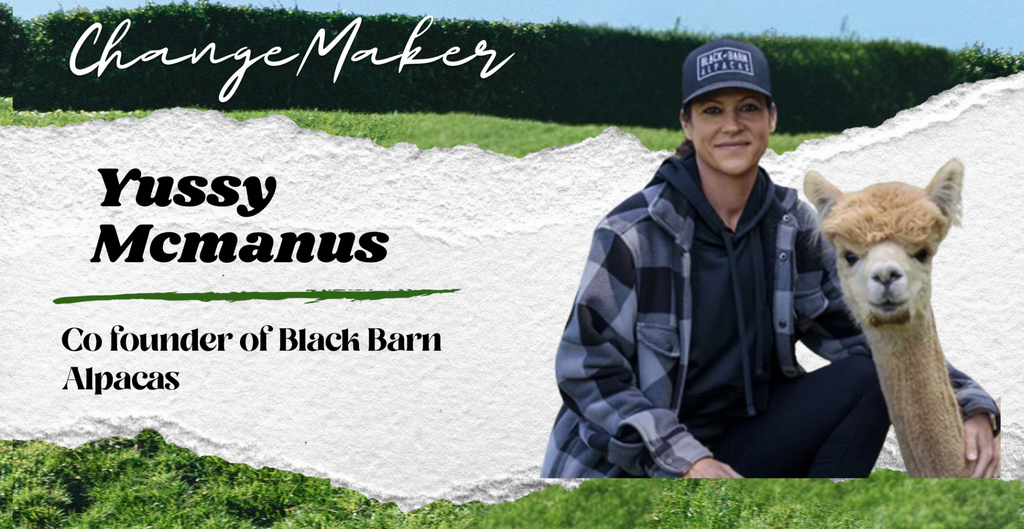
At Black Barn Alpacas, a Maryland-based alpaca farm and retail brand, sustainability begins with the animal. From raising alpacas in a low-stress environment to carefully processing their fiber into long-lasting products, co-founder Yussy McManus believes the future of fashion depends on reconnecting people with where their clothing actually comes from.
“Everything is full circle,” Yussy explains. “It’s everything from the care of raising the animals themselves… down to maintaining their health, shearing, processing their yarn, and providing those products to people.”
And that full-circle approach may offer important lessons for an industry struggling with waste, overproduction, and disconnected supply chains.
Why Is Alpaca Fiber One of the Most Sustainable Materials in Fashion?
Alpaca fiber is often compared to sheep’s wool, but it has several qualities that make it unique.
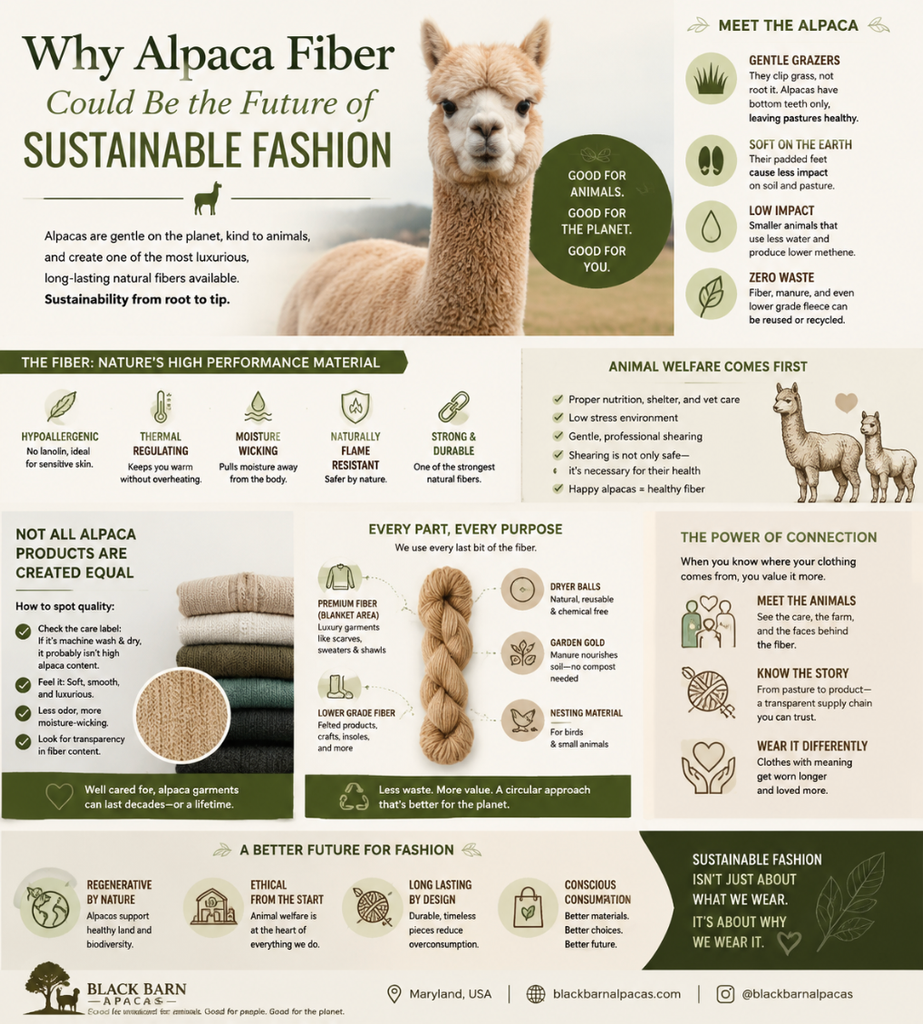
Unlike sheep’s wool, alpaca fiber does not contain lanolin, a natural oil that can cause irritation for some people. Because of this, alpaca fiber is naturally hypoallergenic and does not require harsh chemicals during processing.
Yussy notes that the fiber is:
- Naturally moisture-wicking
- Thermal regulating, helping keep the body warm without overheating
- Naturally flame resistant
- One of the strongest natural fibers available
But the alpaca’s sustainability story starts before the fiber ever becomes clothing.
According to Yussy, alpacas are naturally gentler on the planet compared with many other livestock animals.
“They only have bottom teeth in the front, no top teeth, which means they clip the grass instead of de-rooting it,” she says. “They are soft-footed, so there is less trauma on the earth every time that they walk.”
Alpacas are also smaller animals, typically weighing around 200 pounds compared with much larger livestock, require less water, and produce lower levels of methane.
Even their waste can be used sustainably. Alpaca manure is often considered “garden gold” because it can be applied directly to gardens, while lower-grade fleece can be used as compostable garden material.
“From root to tip, they’re incredibly sustainable,” Yussy says.
Why Does Sustainable Fashion Start With Animal Welfare?
You probably think sustainability starts with the finished product. Yussy argues the process behind the material matters just as much.
A truly sustainable fiber begins with a healthy animal.
At Black Barn Alpacas, that means focusing on nutrition, shelter, veterinary care, and creating a low-stress environment.
“When alpacas stress in their lifetime, you can actually see a break in their fleece,” Yussy explains. “You’re able to visually identify in their fiber if something was going on with their health.”
Responsible shearing is another critical part of alpaca care.
While some consumers worry about whether shearing harms animals, Yussyexplains that it is actually necessary for their wellbeing. Alpacas can grow several inches of fiber each year, and without regular shearing they can become overheated, uncomfortable, and more vulnerable to health issues.
“It would be abusive not to shear them,” she says. “If you shear it, you are actually doing them a service.”
At Black Barn Alpacas, professional shearers work with a team of 15–20 people to make the process as calm and stress-free as possible.
Over time, the animals learn to trust the process.
“The alpacas that we’ve had for a few years don’t have the same reaction to shearing,” Yussy says. “They know they’re in good hands.”
Why Are Not All Alpaca Products Created Equal?
As alpaca fiber becomes more popular, you also need to know how to identify quality products.
One of the biggest clues? The washing instructions.
“If something can go in the washer and dryer, it probably does not contain a lot of alpaca fiber,” Yussy says.
High-quality alpaca products typically require more delicate care, such as hand washing or gentle cleaning.
You can also look for:
- A soft, smooth texture
- Minimal odor
- Moisture-wicking qualities
- Clear information about the fiber content
Because alpaca fiber is naturally antimicrobial and moisture-wicking, garments do not need to be washed as frequently. That also helps extend their lifespan.
When cared for properly, alpaca clothing can last decades or even a lifetime.
Why Use Every Part of the Animal?
One of the biggest challenges in fashion today is waste. Millions of tons of textiles end up discarded every year, often because materials are not designed for long-term use.
At Black Barn Alpacas, the goal is to use every part of the fleece.
The softest fiber, known as the blanket area, becomes luxury garments like scarves and sweaters.
Lower-grade fibers can become:
- Dryer balls
- Shoe insoles
- Felted crafts
- Garden materials
- Nesting materials for birds
“We like to use every last bit of fiber on the animal,” Yussy says.
This approach reflects a larger principle of sustainable fashion: materials should be valued, not treated as disposable.
Why Is Connection the Missing Piece of Sustainable Fashion?
One of the most powerful parts of alpaca fiber is not just what it feels like, it is knowing where it came from.
At Black Barn Alpacas, visitors can meet the animals behind the products.
Yussy says that connection changes how people think about clothing.
“There’s something about knowing where it came from,” she explains. “You can enjoy the scarf and the alpaca simultaneously.” Instead of seeing a sweater as just another item to buy, you can understand the story behind it: the animal, the farmer, the process, and the care that went into creating it. That connection is something modern fashion often loses.
Can Alpaca Fiber Become More Mainstream?
While alpaca fiber has significant sustainability benefits, the industry is still relatively young in the United States. Alpacas were only introduced to the country in the 1980s, meaning the industry is still developing.
One major challenge is infrastructure. Fiber mills that process alpaca fleece are becoming harder to find, and some farmers struggle with long wait times and expensive shipping costs.
For alpaca fiber to grow, Yussy believes awareness is key. Not only among you, but among future farmers and fiber processors.
“There aren’t enough alpacas in the U.S. for major commercial processing,” she says. “But there could certainly be that boutique sense.”
The future of alpaca fiber may not be about mass production. Instead, it may represent a different model for fashion: smaller scale, stronger connections, better materials, and products designed to last.
Because sustainable fashion is not just about what a garment is made from.
It is about understanding who made it, where it came from, and whether it was worth making in the first place.

Lexy Silverstein,