Consumers have spent years being told to shop more sustainably. Buy better materials. Look for eco-friendly labels. Choose brands that claim to be transparent.
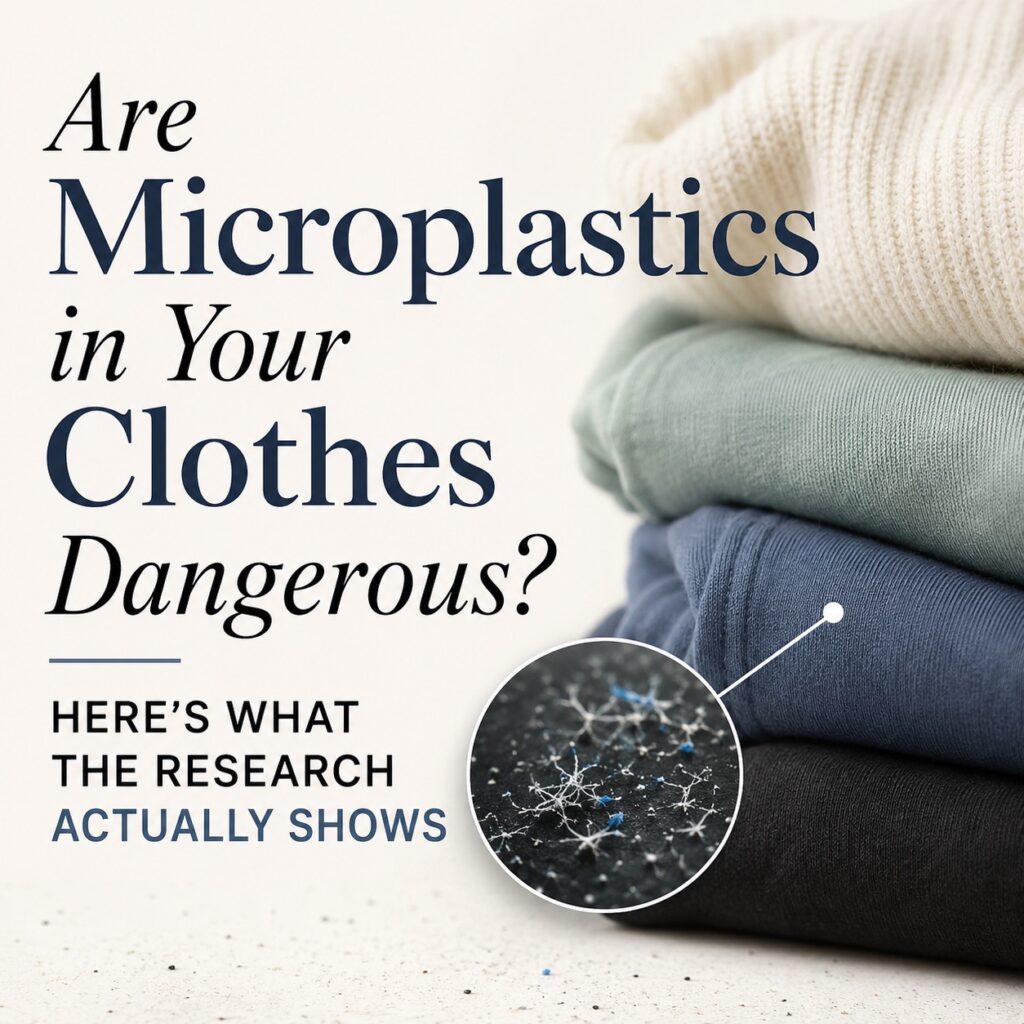
Now many are discovering that some of the clothing marketed as durable, affordable, and performance-driven may also be releasing microplastic fibers into the environment every time it’s washed.
The problem isn’t just the science. It’s that most shoppers have no idea what to do with the information.
Microplastics now make up 13% of all global plastic pollution, and that share is projected to climb significantly over the next 15 years if nothing changes. Roughly 60% of the fibers used in clothing come from plastic-based materials, and every time a piece of synthetic clothing is made, worn, or washed, it sheds microfibers into the environment. Source: Pew Charitable Trusts.
What the Research Actually Says About Microplastics and Clothing
Microplastics don’t just come from packaging and disposable products. In many cases, they come from clothing. Synthetic fabrics such as polyester, nylon, acrylic, and spandex blends are made from plastic-based fibers that can shed tiny particles during normal wear and washing. Those particles can pass through wastewater systems and enter rivers, oceans, and soil. The issue has become particularly relevant in categories like swimwear, where synthetic performance fabrics dominate the market.
Not all fabrics shed equally. Research published in Environmental Science and Pollution Research found that polyester fleece fabrics released substantially more microfibers during washing than standard polyester fabrics, suggesting that fabric construction can be just as important as fiber type when it comes to microfiber pollution. As concern around microplastics grows, these distinctions are becoming increasingly important for consumers trying to understand the environmental impact of the clothes they buy.
Among synthetic materials, textured fabrics such as fleece tend to shed more than smooth, tightly woven polyester used in garments like athletic tops or swimwear linings.
Human exposure is also becoming harder to ignore. In recent years, researchers have detected microplastics in blood, lungs, placentas, reproductive tissues, and other parts of the human body. A widely discussed 2024 study published in the New England Journal of Medicine found microplastics and nanoplastics in carotid artery plaque removed from patients during surgery, adding to a growing body of research examining how these particles move through the body.
What scientists emphasize, however, is that exposure and harm are not the same thing. Researchers have confirmed that microplastics are present in both the environment and human tissues, but the long-term health effects remain under investigation. What is clear is that microplastics are no longer viewed solely as an environmental issue—they have become part of a broader conversation about materials, transparency, and what consumers are bringing into their homes and wardrobes.
The Information Gap is the Real Story
The most important finding in this conversation may not be rising concern, but rising confusion, because consumers don’t need more fear-based headlines—they need clearer context. Right now, terms like “microplastics,” “synthetic fibers,” and “plastic-free clothing” are often used interchangeably without explanation, which makes it difficult for shoppers to understand what’s actually influencing purchasing decisions.
That confusion shows up in the data: people are worried about the issue, but a significant portion don’t feel equipped to act on it. And when sustainability becomes unclear, it risks becoming overwhelming instead of empowering.
For years, fashion sustainability marketing focused on broad claims and certifications, while basic information about material performance and microfiber shedding remained largely absent from consumer-facing conversations.
A small number of brands, including Patagonia and Finisterre, have published information on microfiber pollution and garment care, but detailed, comparable data on fabric shedding is still largely absent across the fashion industry. For most shoppers, that means the environmental impact of materials is rarely visible at the point of purchase.
What Consumers Can Actually Do
For consumers, the challenge isn’t eliminating every synthetic fiber from their lives overnight. It’s understanding where microplastics come from and making more informed choices when possible.
- Check fiber labels. Materials such as polyester, nylon, acrylic, and many synthetic blends are associated with microfiber shedding. Understanding what a garment is made from is the first step toward making informed decisions.
- Be mindful of fleece and fuzzy synthetic fabrics. Research has found that polyester fleece and similar textured materials can shed significantly more microfibers during washing than tightly woven synthetic fabrics.
- Wash clothes less often when appropriate. Because washing is one of the primary ways synthetic garments release microfibers, reducing unnecessary wash cycles can help limit shedding while also extending the life of clothing.
- Consider microfiber-catching solutions. Products such as the Guppyfriend washing bag and external microfiber filters are designed to capture at least some of the fibers released during laundering before they enter wastewater systems.
- Prioritize durability over replacement. Keeping garments longer and replacing them less frequently can reduce overall textile consumption and waste, regardless of the materials involved.
None of these steps completely eliminate microfiber pollution, but they can help consumers navigate the issue with more clarity than many product labels currently provide.
What This Means for Fashion
The microplastics conversation isn’t exposing a lack of consumer concern. It’s exposing a lack of consumer information.
Shoppers are being asked to make increasingly complex decisions about materials, environmental impact, and long-term health questions while receiving very little practical guidance from the industry itself.
If transparency is going to remain one of fashion’s favorite buzzwords, it has to extend beyond marketing claims and into the actual behavior of the materials brands sell. Otherwise, consumers will continue carrying the burden of a problem they were never given the information to evaluate in the first place.